FAQs
-
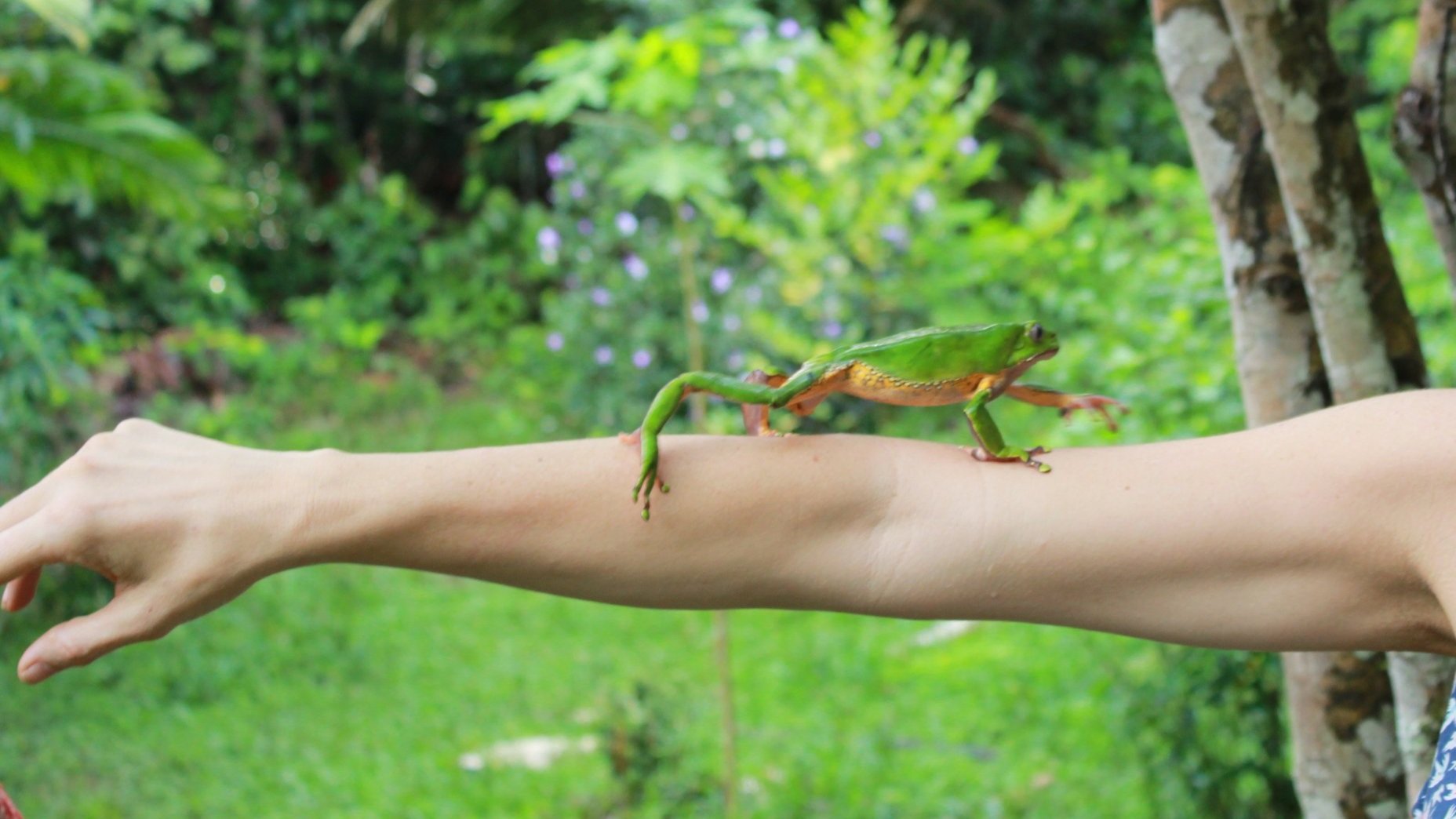
Kambo is a remarkably complex medicine containing a diverse range of naturally occurring bioactive peptides, many of which have attracted scientific interest because of the ways they interact with the human body.
Research into individual peptides found in Phyllomedusa bicolor secretion has demonstrated antimicrobial, antitumor, and antiangiogenic activity in laboratory studies, with some compounds also showing promising activity in animal models. These findings have made Kambo’s peptide profile an ongoing area of interest within pharmacological research.
It is important, however, to distinguish research on isolated peptides from evidence that Kambo itself treats or cures a specific medical condition. While its compounds are scientifically fascinating, Kambo has not been established through human clinical trials as a treatment for cancer, HIV, diabetes, autoimmune disease, depression, or other medical conditions.
Traditionally, Kambo has been used by Indigenous communities of the Amazon in connection with strength, stamina, vitality, hunting, and clearing panema, a state often described as heaviness, diminished vitality, or bad luck.
In contemporary use, people commonly describe feeling clearer, lighter, more energized, emotionally open, or deeply reset following ceremony. Others may feel tired, reflective, or simply in need of rest. Each body and each experience is different.
For me, Kambo is not about promising a cure or a particular outcome. It is about working intentionally with a powerful medicine, honoring both its traditional use and the unique way it engages the body, while creating space for each person’s experience to unfold in its own way.
-
Yes. Kambo creates a powerful physiological response in the body and, like anything that significantly affects our biochemistry, it comes with risks and is not appropriate for everyone.
This is why screening is such an important part of my process. Before we work together, I’ll review your health history, medications, current medical conditions, and any potential contraindications to determine whether moving forward is appropriate.
Certain health conditions, medications, and circumstances can increase the risks associated with Kambo. While most of the physical effects are short lived, serious adverse reactions have been reported, which is why I take preparation, screening, hydration guidance, and close supervision seriously.
If you are currently taking medication, managing a medical condition, are pregnant or may be pregnant, or have questions about how Kambo could interact with your health, I may ask you to speak with your healthcare provider before we proceed.
My intention is never to convince someone to receive Kambo. It is to make sure you have the information you need to make an informed decision and that, if we do move forward, we do so with as much care, preparation, and awareness as possible.
-
Contraindications for Kambo are categorized into two types:
Relative Contraindication: This means that caution is advised when combining certain drugs or procedures. It may be acceptable to proceed if the potential benefits outweigh the risks.
Absolute Contraindication: This indicates that the substance or event could lead to a life-threatening situation. In these cases, the treatment must be avoided entirely.
Given the varying classifications of contraindications and the unique biochemistry of each individual, treatment plans can often be tailored for many of the conditions listed. Therefore, complete transparency about your health is essential for developing a safe and effective treatment plan with your practitioner.
Conditions to Discuss with Your Practitioner:
Serious mental health conditions beyond depression
Heart conditions (e.g., recent heart attack, stroke, bypass surgery, or enlarged heart)
Controlled low or high blood pressure
History of blood clots
Aneurysms or brain bleeding
Extreme varicose veins or medication for varicose veins
Lymphatic system diseases
Addison’s Disease
Epilepsy
Presence of artificial devices (e.g., pacemakers)
Organ transplant recipients
Recovery from major surgery within the last 8 weeks
Chemotherapy or radiation treatments within 6 weeks before or after
Severe asthma
Severe allergies (e.g., bee, wasp, cat)
Pregnancy or breastfeeding a child under 6 months
Fasting or detox within 5 days before or after treatment
Recent Iboga session (within 4 weeks before or after)
Recent Bufo session (within 2 weeks before or after)
It's crucial to discuss any of these conditions with your practitioner to ensure a safe and tailored approach to Kambo treatment.
-
Kambo is administered through a series of small, superficial points on the skin commonly referred to as “gates.”
Traditionally, these points are created using a heated tamishi vine. The very top layer of skin is gently opened, creating a small superficial area where the Kambo secretion is then applied.
The number and placement of gates will vary from person to person and are determined intentionally based on the individual and the session.
Once applied, Kambo’s naturally occurring bioactive peptides are absorbed through these superficial points, and the physical effects can begin quite quickly, often within the first few minutes.
The application itself is only one part of the ceremony. Before we begin, I’ll walk you through the entire process, answer your questions, and make sure you understand what to expect before anything is applied.
-
What will I experience physically?
Kambo works quickly, and the physical experience can be intense, but the strongest effects are generally short lived.
Within a few minutes of application, you may become very aware of your heartbeat and notice warmth or flushing throughout the body. Other common responses can include sweating, nausea, abdominal cramping, dizziness, trembling or chills, increased heart rate, changes in blood pressure, and the urge to purge through vomiting or bowel movements.
Every body responds differently. You may experience several of these sensations, only a few, or move through them with varying degrees of intensity. There is no particular response you need to have for your ceremony to be meaningful.
The most active portion of the experience typically begins within minutes and often settles considerably within the first hour. Afterward, it is common to need time to rest and recalibrate. Some people describe feeling deeply relaxed, clear, tired, spacious, or emotionally open after ceremony, while others simply feel ready to rest.
This is why I leave plenty of room after the active Kambo portion for your nervous system and body to settle. We move into a harmonic sound journey, nourishment, rest, and integration rather than rushing you immediately back into your day.
Reading a list of physical sensations can understandably sound like a lot. Part of our consultation and intake process is making sure you understand what to expect, reviewing your health history and contraindications, and giving you space to ask questions before deciding whether Kambo is right for you.
-
Not necessarily.
Vomiting is a common physical response to Kambo, but every body responds differently, and the amount you purge is not a measure of how successful or meaningful your ceremony was.
The most important part of the experience is how you arrive: with a clear intention, curiosity, and a willingness to soften into what is happening rather than trying to force a particular outcome.
Release can look different for everyone. Sometimes it is very physical. Other times the experience may feel more emotional, reflective, or simply quiet.
There is no need to chase the purge. Your job is simply to listen to your body, stay present, and allow the experience to unfold as it does.
-
Kambo pricing can vary considerably from practitioner to practitioner depending on experience, location, whether you’re receiving privately or in a group, and what is included in the ceremony.
Cost matters, but it shouldn’t be the only thing guiding your decision.
When choosing a practitioner, consider:
Whether you want a private, group, or retreat experience
Their training and experience
Whether they conduct a thorough health screening and clearly discuss contraindications
How much individualized attention and support you’ll receive
What is included before, during, and after ceremony
Most importantly, whether you feel comfortable, informed, and genuinely supported by the person you’re choosing to work with
A good practitioner should be willing to answer your questions before you ever commit to ceremony.
Kambo is an intimate experience. Take the time to find someone whose approach, experience, and level of care feel right for you.